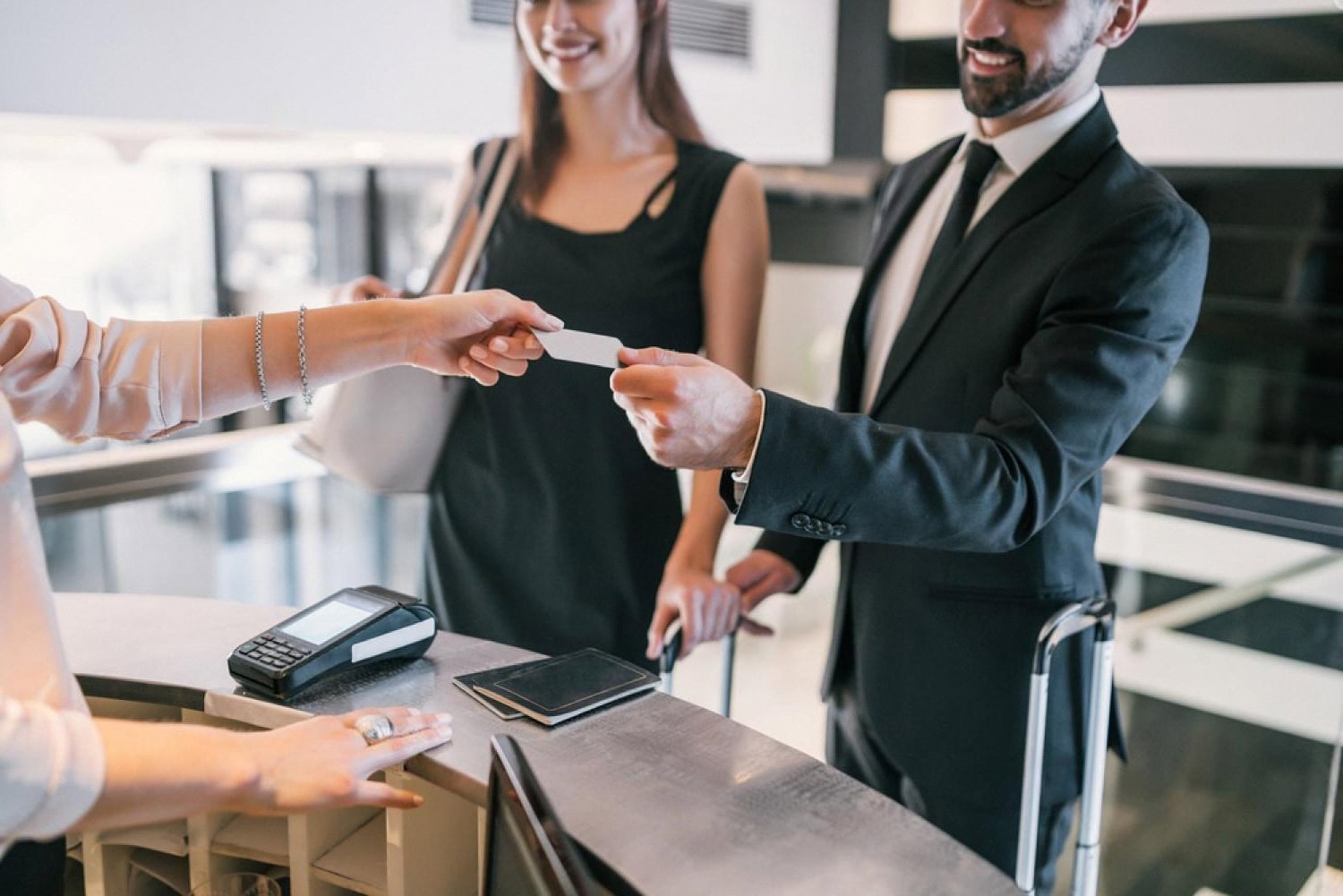
Hospitality, 2026
From pandemic workaround to default guest expectation
In 2020, contactless check-in was a safety patch bolted onto hotel operations almost overnight. Six years later, US travelers in 2026 don’t see it as a perk, they see it as the baseline. The interesting question isn’t whether contactless is happening, it’s how deep the shift goes, and what hotels that still cling to the old front-desk-only model are quietly losing.
Why it matters
The COVID jolt that never fully reversed
Before 2020, mobile keys and self check-in existed mainly at a few tech-forward chains like Hilton and Marriott. The pandemic forced every operator to figure out how to hand a guest a room without a 10-minute counter interaction. Hotels that already had the infrastructure scaled it; the rest scrambled. According to the American Hotel and Lodging Association’s state of the industry researchdigital and contactless services were one of the few investment categories that grew through the recovery years.
What looked like a temporary measure stuck because guests stopped tolerating the alternative. Standing in a 15-person lobby line at 11 p.m. after a delayed flight isn’t a hospitality moment anyone is nostalgic for.

Guest expectations
What US travelers actually want at check-in now
Recent guest sentiment studies from STR and Skift Research consistently show the same three asks: skip the line, get the key on the phone, and only talk to a human if something goes wrong. The friction point has moved. Guests no longer want a warm welcome speech, they want their room, fast, and a real person available when they need one.
- Mobile key access before arrival
- Digital ID and payment, no plastic shuffle
- Early room-ready alerts via the hotel app
- Optional human contact, not mandatory
What to expect: the contactless check-in flow in 2026
Most major US brands now run a near-identical pattern. The steps below describe what a guest typically moves through at a Hilton, Marriott, IHG, Hyatt, or independent property running modern PMS integrations. For operators building or upgrading the experience, dedicated platforms like contactless hotel checkin systems handle ID verification, signature capture, and key issuance in one flow.
- Pre-arrival prompt. 24 to 48 hours before check-in, the guest gets an app or email notification to verify ID and confirm payment.
- Digital ID upload. Driver’s license or passport photo plus a selfie. Most systems match in under 30 seconds.
- Room assignment and upsell. Guest sees available rooms on a map, can pay to upgrade, and locks in arrival time.
- Mobile key delivery. Bluetooth or NFC key drops into the wallet app once the room is physically ready.
- Direct-to-room arrival. Guest walks past the desk and goes straight to the door. Some properties offer a quick lobby greeter for first-timers.
- In-stay service via chat. Towels, late checkout, room service, all handled through the same app, no phone call required.
Adoption snapshot: where US hotels stand
| Segment | Contactless check-in offered | Mobile key available | Typical guest adoption |
|---|---|---|---|
| Upper-upscale and luxury chains | ~95% | ~88% | 60-70% |
| Upscale and midscale brands | ~80% | ~70% | 45-55% |
| Economy and limited-service | ~55% | ~35% | 25-35% |
| Independent boutique hotels | ~45% | ~30% | 30-40% |
Figures reflect publicly reported brand rollouts and operator surveys through late 2025. The gap is closing fastest at the midscale tier, where franchise pressure and labor shortages are pushing properties to automate the front desk whether they planned to or not.
The unique angle
Before and after the switch
Operators that have published before-and-after data tell a consistent story. Hilton’s reporting on Digital Key access, IHG’s mobile check-in pilots, and several independent case studies on Hotel Tech Report point in the same direction:
- Guest satisfaction (NPS): typically up 8 to 14 points at properties post-rollout
- Online review scores: arrival-experience mentions shift from neutral or negative to positive in 60%+ of reviews
- Repeat bookings: properties report 10 to 18% lift among app-active guests
- Front-desk labor hours: down 25 to 40% per occupied room, redeployed to lobby hosting and service recovery
- Loyalty enrollment: roughly 2x at properties that gate mobile key behind loyalty signup
The guests who use mobile check-in once are the guests who book us again. That’s the entire business case in one sentence.
What’s next: biometrics, digital IDs, and facial recognition
The next phase, already in pilot at properties in Las Vegas and Orlando, removes even the phone tap. Guests enroll once, then walk into the hotel and get recognized at the elevator. The room door unlocks based on a facial match. It sounds futuristic until you remember most US airports already do something similar with CBP biometric boarding.
Three threads are converging:
- Mobile driver’s licenses. Apple Wallet and Google Wallet IDs are accepted by the TSA in a growing list of states, and hotels are next in line for that same trust framework.
- Biometric verification. One-time face scan at enrollment, used for the rest of the stay and future stays at the same brand.
- Tokenized payment. The card stays in the wallet, the hotel sees a token, the guest never reads out a 16-digit number.
The privacy conversation is real, and operators that handle it carelessly will pay for it. The brands getting it right publish clear retention policies, let guests opt out without penalty, and store templates rather than raw images.
Trend or standard? The honest answer
In the US in 2026, contactless check-in is no longer a trend at the top of the market. It is the default at every major chain and a competitive necessity at midscale. The remaining holdouts are mostly independents and economy properties, and even there the math is shifting as franchise systems mandate it and labor costs keep climbing.
The interesting question for the next two years isn’t whether to offer contactless. It’s how human to make the parts that remain. The hotels winning right now are the ones that automated the boring stuff and reinvested those payroll dollars into a real concierge in the lobby, a manager walking the floor, and someone who actually picks up when a guest calls at 2 a.m. Contactless didn’t kill hospitality. It freed it up to be hospitality again.
Frequently asked questions
What is contactless hotel check-in?
Contactless hotel check-in is a process where guests verify their identity, sign registration documents, pay, and receive a room key without standing at the front desk. It usually happens through the hotel’s mobile app or a web link sent before arrival.
The key is delivered as a digital key on the guest’s phone (via Bluetooth or NFC) or as a coded card picked up from a kiosk. Staff are still available, but interaction is optional rather than required.
Are contactless hotels safe?
Yes, when implemented by reputable brands, contactless check-in is generally as safe or safer than traditional check-in. ID verification uses the same document checks a human would perform, often with additional liveness detection on the selfie step. Digital keys are encrypted and tied to a single guest’s device for the length of the stay.
The areas to watch are data retention (how long the hotel stores your ID image and biometric template) and Wi-Fi security. Major US brands now publish their privacy policies in plain language, and you can typically opt for a traditional check-in at no extra cost if you prefer.
Why are hotels moving to mobile check-in?
Three reasons, in order of weight. First, guests prefer it: satisfaction scores and repeat booking rates both climb at properties that adopt it well. Second, labor costs in US hospitality have risen sharply since 2021, and automating the routine parts of check-in lets hotels redeploy staff to higher-value service. Third, loyalty: mobile check-in funnels guests into the brand app, which drives enrollment, direct bookings, and lower commission costs to online travel agencies.
Do I still need to visit the front desk if I use mobile check-in?
Usually not. At most major US chains, you can go straight from the front door to your room once the mobile key is active. You may still want to stop by the desk for special requests, package pickup, or if there’s an issue with the key, but it’s no longer a required step.
What happens if the mobile key doesn’t work?
Every contactless system has a fallback. Front desks issue a traditional keycard within seconds, and most properties keep at least one staff member trained to troubleshoot Bluetooth pairing or app permissions. Common causes are an outdated app version, Bluetooth turned off, or the phone’s battery being too low for NFC.
Will facial recognition replace mobile keys?
It’s heading that way at high-end and high-volume properties, but not overnight. Facial recognition removes the phone tap entirely, which is faster and more accessible for guests who struggle with apps. Mobile keys, however, are cheaper to deploy and don’t trigger the same privacy concerns, so they will likely coexist for several more years.
Expect to see facial recognition first at resort properties, casino hotels, and luxury brands where the enrollment effort pays off across longer stays.
Can older guests or non-app users still check in normally?
Yes. No reputable US hotel has eliminated the staffed front desk, and brand standards generally require it. Contactless is offered as an option, not a mandate. If anything, freeing staff from routine check-ins means guests who want a human interaction often get more attention, not less.

Basketball fan, mother of 2, fender owner, vintage furniture lover and HTML & CSS lover. Performing at the fulcrum of modernism and programing to give life to your brand. I sometimes make random things with friends.