
Modern classrooms in the UAE are moving away from rote memorisation and toward lessons that ask children to think, build, and imagine. The table below sums up twelve creative activities teachers and parents use to turn ordinary topics into something kids actually want to do.
Twelve Creative Learning Activities for UAE Classrooms
| Activity | Subject | Age | What kids practise |
|---|---|---|---|
| Build numbers from pencils or straws | Maths | 4-7 | Number recognition, fine motor skills |
| Shape hunt around the room | Geometry | 4-8 | Spatial awareness, observation |
| Team race: find 10 round objects | Maths / Science | 5-9 | Counting, teamwork, categorisation |
| Story cubes with picture prompts | English / Arabic | 5-11 | Vocabulary, narrative structure |
| Design a mini souk stall | Economics / Social studies | 7-12 | Money, pricing, communication |
| Draw the water cycle as a comic | Science | 7-11 | Sequencing, visual literacy |
| Build a dune using flour and cocoa | Geography | 6-10 | Landforms, experimentation |
| Class poetry slam in two languages | Languages | 9-14 | Rhythm, public speaking |
| Code a maze on paper first | ICT | 8-13 | Logic, algorithmic thinking |
| Role-play a UAE historical figure | History | 8-13 | Empathy, research |
| Design a solution to a real school problem | Design thinking | 10-15 | Problem-framing, prototyping |
| Compose a short song about the topic | Any | 6-14 | Memory, creative expression |
Why Play Beats Passive Listening
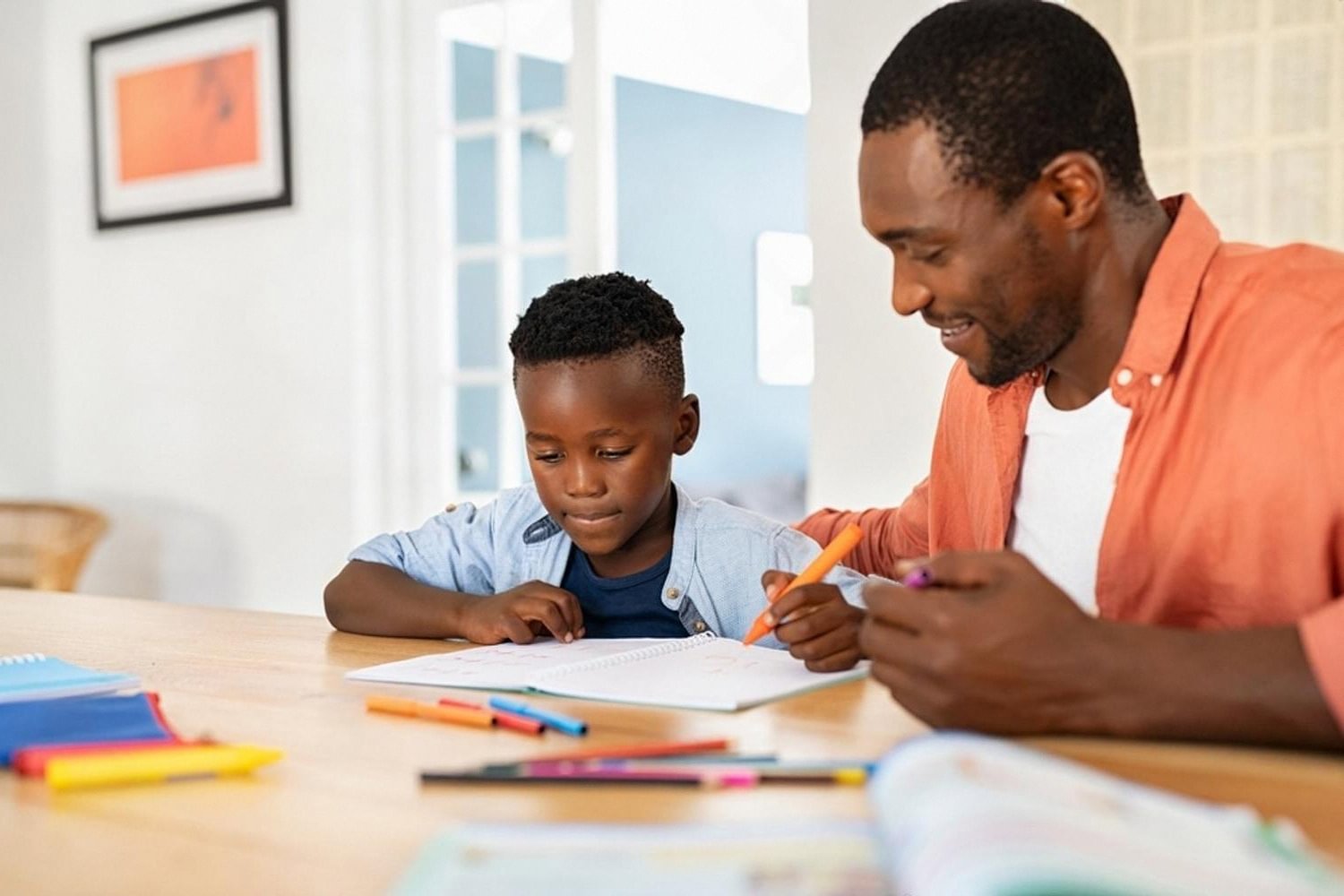
Children learn faster when a lesson feels like a game. Ask a six-year-old to memorise the number seven and you will get a shrug. Ask her to build seven out of coloured pencils on her desk, and she will do it three times to check. The activity turns an abstract symbol into something she can move with her hands.
This is not a new idea. Research on play-based learning, including work summarised by UNICEFhas consistently linked hands-on activity with stronger recall and better problem-solving in primary years. The UAE’s own Centennial 2071 vision puts creative and future-ready skills at the centre of school reform, and many schools in ajman uae now weave design projects, robotics, and open-ended tasks into everyday timetables.
Turning a Lesson into a Team Contest
Splitting a class into small teams changes the energy in the room. A simple challenge, which group can find ten round objects in the classroom first, adds a sporting element to what would otherwise be a page in a workbook. Children negotiate, argue over whether a clock face counts, and end up teaching each other without noticing.
- Keep teams small, three or four pupils, so nobody hides at the back.
- Give a time limit. Two minutes creates urgency without stress.
- Rotate roles: one child counts, one records, one presents to the class.
- Debrief after every round. Ask what worked and what did not.
The competitive layer is only a wrapper. The real work is the counting, the categorising, and the arguing about categories, which is exactly the kind of thinking exams later ask for in longer form.

Recommendation for parents and teachers
Pick one activity from the table above and try it once this week. Do not scrap the textbook, just add fifteen minutes of creative practice around the same topic. Watch which children light up. That signal tells you more about how they learn than any test result.
What Creativity Is Not
Creativity in education is often confused with arts and crafts. Painting a poster about the desert is fine, but it is not the whole story. A creative task has a real question at its core, some room for a wrong answer, and a way for the child to explain the choices she made. A worksheet with a colouring box in the corner does not qualify.
The best UAE classrooms treat creativity as a way of thinking that runs through maths, science, and languages, not as a separate subject taught for forty minutes on Wednesday. When it works, kids stop asking whether something will be on the test and start asking what happens if they try it a different way. That shift is the whole point.
Frequently asked questions
At what age should creative learning start?
As early as possible. Toddlers already learn through play, and structured creative tasks work well from age three onward. The activities become more complex as children grow, but the underlying pattern, hands-on exploration followed by short reflection, stays the same all the way through secondary school.
Does play-based learning cover the UAE national curriculum?
Yes, when it is planned properly. Creative activities are a delivery method, not a replacement for content. A teacher can hit the same maths, science, or language objectives through a game as through a workbook. The difference is that children remember the game a week later.
How can parents support creative learning at home?
Keep it simple. Ask open questions during everyday moments: how many round things can you see in the kitchen, can you invent a new ending to this story, what would you build if you had ten pencils and some tape. Fifteen minutes a day is enough. Avoid grading the answers.
Is competition between teams healthy for young children?
In short bursts, yes. Team contests work well when the stakes are low and the reward is symbolic, like being the first to line up or getting to pick the next activity. Rotate winning teams and celebrate effort, not just speed, so no child feels permanently on the losing side.
Do creative methods work for children learning English as a second language?
They tend to work better, not worse. A child who is unsure of a word will still point, mime, or draw. Activities that involve objects, movement, and images give language learners more entry points than a page of text, which is why bilingual classrooms in the UAE lean heavily on them.
How do teachers assess creative work fairly?
By focusing on process, not just the finished product. Simple rubrics that score things like problem-framing, use of evidence, and clarity of explanation give a fairer picture than a single mark out of ten. Many UAE schools now include short pupil interviews or portfolio reviews alongside written tests.

Basketball fan, mother of 2, fender owner, vintage furniture lover and HTML & CSS lover. Performing at the fulcrum of modernism and programing to give life to your brand. I sometimes make random things with friends.