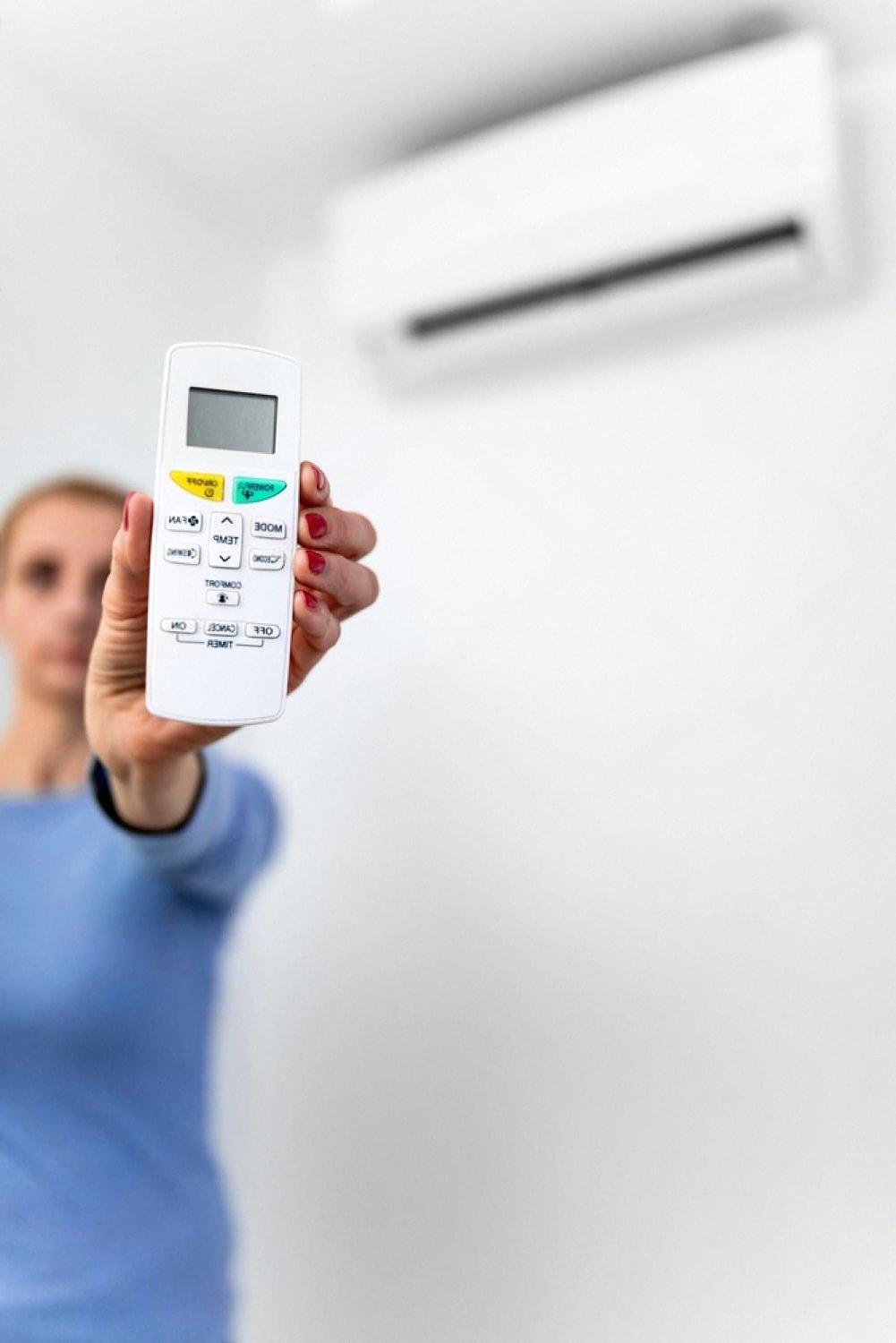
Cooling in the UAE
Mini AC vs fan: which one actually lowers the temperature?
In a Dubai summer, the difference between a fan and a mini air conditioner is not just marketing. One of them changes the temperature of the air in the room. The other changes how your skin feels while the room stays the same. Understanding that distinction is the whole game when you are deciding what to buy, what to rent, and what to trust on a 45 C afternoon.
A fan does not cool air. It moves it. When moving air passes over your skin, it speeds up the evaporation of sweat, and evaporation carries heat away from your body. That is why a fan feels cooling even though a thermometer sitting on the shelf will read the same number before and after you switch it on. The technical name for this trick is the wind-chill or apparent temperature effect.
A mini AC, by contrast, contains a refrigerant loop. It pulls heat out of the indoor air and dumps it outside through a hot exhaust. The room genuinely gets colder. That is why an air conditioner needs a window, a hose, or an outdoor unit, and a fan does not. No refrigerant means no real temperature drop, only better airflow.
The honest comparison
Mini AC: what it does well
- Actually lowers room temperature, often by 8 to 12 C below ambient
- Reduces humidity, which matters in coastal Dubai and Abu Dhabi
- Works when outdoor air is already hotter than your body temperature
- Keeps sleep quality stable during July and August nights
- Filters dust, useful during shamal wind days
Fan: where it falls short
- Only creates a wind-chill effect, does not change room temperature
- Above roughly 35 C, blowing hot air on skin can raise heat stress instead of easing it
- Does nothing about humidity
- Struggles in sealed rooms with no cross-ventilation
- Outdoors in direct sun at 42 C+, offers almost no real relief
When to choose
When a mini AC is the right call
Between May and September in the UAE, indoor temperatures in unshaded apartments can sit above 32 C even at midnight. In those conditions, a fan alone is not enough. If you sleep in a bedroom that faces west and traps afternoon heat, a mini split or portable AC is the only device that will bring the room into a range the World Health Organization considers safe for sustained rest, roughly 24 to 26 C.
A mini AC also earns its keep during humid coastal weeks, when Dubai’s relative humidity climbs past 70 percent. Fans do nothing about moisture. An air conditioner condenses water out of the air as it cools, which is the reason a room with an AC running feels dry and breathable, and a room with only a fan feels like a warm sauna with a breeze in it.
Choose an AC when you have a closed indoor space, when nights are not dropping below 30 C, when the humidity is high, or when someone in the household is elderly, very young, or has a heart or respiratory condition.
When to choose
When a fan is actually the smarter pick
Fans are not useless. In the shoulder months, roughly November through March, Dubai evenings drop into the low 20s and a ceiling fan or pedestal fan is all most rooms need. Running a compressor at that point is wasted electricity, and DEWA bills reflect that quickly. A fan uses somewhere between 30 and 75 watts. A mini split can pull 900 to 1500 watts. The gap on your bill is not subtle.
Fans also pair well with an AC rather than replacing it. Set the AC to 24 or 25 C, run a ceiling fan on low, and the wind-chill effect makes the room feel two to three degrees cooler than the thermostat says. That is one of the cheapest efficiency wins available in a UAE home.
For semi-outdoor spaces, majlis tents, warehouses, or event setups, a standard fan will disappoint but an evaporative cooler will not. It uses water to actually drop the surrounding air temperature by several degrees, unlike a plain fan. For temporary setups, an air cooler for rental is often the practical middle ground between a weak fan and a full outdoor AC installation.
If the outdoor thermometer reads higher than your skin temperature, a fan is no longer cooling you. It is baking you faster. In Dubai’s July heat, that line is crossed by mid-morning.
Using a fan outdoors in extreme heat
Once ambient air passes about 35 C, the physics of a fan starts working against you. You are no longer evaporating sweat faster in cool air, you are pushing hot air across skin that is already struggling to shed heat. The US CDC specifically warns that electric fans can accelerate dehydration and heat illness above roughly 35 C, especially in low-humidity conditions.
- Do not rely on a bare fan outside in peak Dubai summer. Between June and September, midday temperatures make a standalone fan a hazard rather than a comfort tool.
- Add water to the equation. A misting fan or evaporative cooler drops the actual air temperature by 5 to 10 C in dry conditions, unlike a plain fan.
- Stay hydrated. If a fan is running on you outdoors, drink more, not less. The breeze hides how quickly you are losing fluid.
- Use shade first, airflow second. A fan under a shaded majlis is useful. A fan in direct sun is decorative.
- Watch for warning signs. Headache, nausea, or stopping sweating are signs to get indoors to real AC immediately.
Bedroom, June to September
Mini split or portable AC set to 24 to 26 C, with a ceiling fan on low. A fan alone will not deliver sleep-quality cooling.
Balcony or terrace
A pedestal fan is fine only in shoulder months. In summer, use a misting fan or a rented outdoor evaporative cooler.
Event or warehouse
Standard fans move stale air without cooling it. Industrial air coolers or spot AC units are the honest solution.
Frequently asked questions
Does a fan actually lower the temperature of a room?
No. A fan does not remove heat from a room, it only moves air around. The thermometer reading before and after switching on a fan will be almost identical. What changes is how your skin feels, because moving air speeds up sweat evaporation and carries body heat away.
Only devices with a refrigerant cycle, like a mini split, portable AC, or window unit, can actually reduce the temperature of indoor air.
If there is no refrigerant, how can the perceived temperature drop?
The perceived drop comes from your body, not the air. Sweat on your skin evaporates faster when air moves over it, and evaporation absorbs heat from your skin. You feel cooler even though the surrounding air is unchanged.
This is why a fan feels great at 30 C with low humidity and almost useless at 42 C, where the air is already too hot to accept much more heat from your body.
Which is better for Dubai summers, a mini AC or a fan?
For June through September in the UAE, a mini AC is the only option that actually keeps a room safe and sleepable. Fans on their own cannot cope with 40 C days and humid coastal nights.
In cooler months, November through March, a ceiling or pedestal fan is often enough on its own and dramatically cheaper to run.
Is it dangerous to use a fan outdoors in extreme heat?
It can be. Once outdoor air passes roughly 35 C, blowing that hot air across your skin accelerates dehydration and can raise the risk of heat exhaustion instead of preventing it. Health authorities including the CDC have flagged this specifically.
If you need airflow outdoors in a UAE summer, use a misting fan or an evaporative cooler, stay in shade, and keep drinking water.
Can I combine a fan and an air conditioner to save energy?
Yes, and this is one of the most efficient setups in a UAE home. Set the AC thermostat to 24 or 25 C and run a ceiling fan on low. The wind-chill effect makes the room feel two to three degrees cooler than the thermostat reads, so you can keep the AC set higher and cut your DEWA bill.
What about outdoor events or warehouses, is a normal fan enough?
Not in a UAE summer. A standard fan just circulates hot air. For semi-outdoor spaces like majlis tents, terraces, warehouses, and events, an evaporative air cooler is the practical choice because it lowers the actual temperature of the air by using water evaporation.
For short-term needs, renting an outdoor air cooler is usually more sensible than buying one, since the equipment is bulky and only useful for part of the year.
How much cheaper is a fan to run than a mini AC?
Roughly ten to twenty times cheaper on electricity. A typical fan uses 30 to 75 watts, while a mini split runs at 900 to 1500 watts depending on size and setting. Over a full Dubai summer, the difference on your DEWA bill is substantial, which is why the smartest approach is using each device where it actually works.

Basketball fan, mother of 2, fender owner, vintage furniture lover and HTML & CSS lover. Performing at the fulcrum of modernism and programing to give life to your brand. I sometimes make random things with friends.